
What Is the Brass Finish? Polished, Brushed, and Unlacquered Explained
Brass comes in three main finishes: polished, brushed (satin), and unlacquered. Each looks different, ages differently, and suits different applications. This article explains what each finish actually is, how it behaves over time, and when to choose one over another.
What Is Polished Brass?
Polished brass is solid brass that has been buffed to a mirror-like, highly reflective surface. It is the brightest and most visually striking of the three finishes — it reflects light strongly and reads as distinctly gold in most interior contexts. Polished brass shows fingerprints and water spots more readily than brushed brass, and it will develop a patina over time if left unlacquered. It is commonly specified for statement pieces: hotel bars, luxury retail displays, and residential installations where visual impact is the priority.
What Is Brushed (Satin) Brass?
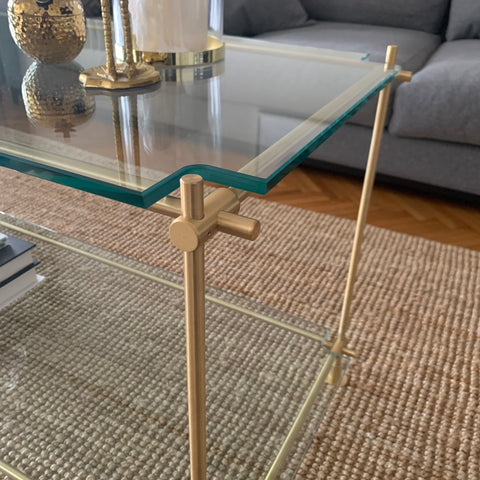
Brushed brass — also called satin brass — is solid brass that has been mechanically finished with fine abrasive material in one direction, creating a linear, matte texture across the surface. The result is a warm, diffuse sheen rather than a mirror reflection. Brushed brass shows fingerprints less readily than polished, making it the more practical finish for high-use environments like bars and kitchens. It is currently the most widely specified finish for brass shelving in both residential and commercial applications.
What Is Unlacquered Brass?
Unlacquered brass is brass that has no clear protective coating applied over the surface. Both polished and brushed finishes can be lacquered or unlacquered — the lacquer is a separate step applied after the surface finish. Unlacquered brass is exposed directly to air, humidity, and handling, which means it develops a natural patina over time: a gradual darkening and warming of tone that is unique to each piece and its environment.
Lacquered brass has the same surface finish but with a clear coating that slows the patina process. Lacquered brass maintains a more consistent appearance with minimal maintenance, but the lacquer will eventually crack, yellow, or peel — typically after 3–7 years depending on environment and UV exposure. Unlacquered brass has no coating to fail. The patina is the finish.
All of our shelving is unlacquered solid brass — both polished and brushed finishes ship without lacquer.
Polished vs Brushed Brass: Which Should I Choose?
Choose brushed (satin) brass if: the shelving will be touched frequently (bar back, kitchen, pantry), you want a forgiving finish that shows fewer fingerprints, or the overall aesthetic calls for a warm, matte appearance. Brushed brass is the practical choice for most bar and kitchen installations.
Choose polished brass if: visual impact is the priority, the installation is in a lower-traffic location, or you want the maximum reflective quality of the material. Polished brass is the right choice for statement pieces in lobbies, hotel bars, and display contexts.
Both are 100% solid brass. The underlying material is identical — only the surface treatment differs.
How Does Brass Patina Over Time?
Unlacquered solid brass oxidizes naturally when exposed to air, moisture, and handling. The surface develops a patina — a gradual darkening and warming of tone that is a chemical property of the copper content in the alloy. The rate of patina development depends on the environment: high humidity, frequent handling, and proximity to cleaning products accelerate patination; dry, low-traffic environments slow it.
In a bar or kitchen used daily, visible patina typically appears within a few months. High-contact areas (fittings, the ends of rods, areas that are regularly touched) develop patina faster than low-contact areas, creating a natural variation in color across the piece. This variation is considered a characteristic of the material, not a defect.
The patina can be maintained at any stage or reversed entirely with a non-abrasive brass polish, which removes surface oxidation and restores a bright finish without damaging the underlying material.
What Is the Difference Between Solid Brass and Brass-Plated?
Solid brass is brass throughout — the same material from surface to core. Brass-plated refers to a steel or aluminum base component with a thin layer of brass or brass-colored finish applied to the surface. The two look similar in product photography but behave very differently over time: solid brass develops a patina, while brass-plated surfaces chip, peel, or wear through to the base material. For permanent shelving installations, solid brass is the correct specification. For a full comparison, see our solid brass vs brass-plated guide.
Which Brass Finish Is Best for Bar Shelving?
Brushed (satin) unlacquered brass is the most commonly specified finish for bar back shelving in both residential and commercial contexts. The reasons: it shows fingerprints less readily than polished, the matte quality complements the glassware and bottles displayed on it, and the patina it develops over time suits bar environments aesthetically. Polished brass is the right choice when the bar installation is intended as a visual statement — hotel bars, luxury retail, and spaces where the reflective quality of the shelving is part of the design intent.
Frequently Asked Questions
Does unlacquered brass require special cleaning?
No. Routine care is simple: dust with a dry microfiber cloth, wipe with a damp cloth for light cleaning. Avoid abrasive cleaners and bleach-based products. If you prefer to maintain a brighter appearance, occasional use of a non-abrasive brass polish removes surface oxidation. No specialist products are required.
Can I stop unlacquered brass from developing a patina?
You can slow the process significantly with regular polishing, which removes surface oxidation and keeps the brass bright. You cannot stop it entirely — this is a property of the material. If you want a brass finish that maintains its appearance without any maintenance, a lacquered finish is the better choice. We offer unlacquered finishes only; if lacquered is required, contact us to discuss.
Will all parts of my shelving patina at the same rate?
No. High-contact areas — fittings, rod ends, areas that are regularly touched — develop patina faster than low-contact areas. This creates a natural variation across the piece. Some customers consider this unevenness part of the character of unlacquered brass; others find it undesirable. If consistent appearance is a priority, polishing the entire system at regular intervals (every 6–12 months) keeps the patina even.
Is brushed brass the same as matte brass?
Brushed brass and matte brass are used interchangeably in most interior design contexts and refer to the same surface treatment: a directional fine abrasive finish that creates a low-glare, warm, satin sheen. Satin brass is also the same thing. All three terms describe the same finish.
What is the difference between warm brass and cool brass?
These are informal descriptors for the tone of the brass alloy. Warm brass has a higher copper content, giving it a richer, more orange-gold appearance. Cool brass (sometimes called pale brass or light brass) has a higher zinc content, giving it a lighter, more yellow-gold appearance. Our shelving is produced in standard brass alloy — the tone is warm, consistent with most residential and hospitality specifications.